This post contains affiliate links.
A misfire is the fault most people can feel before they can name. The engine stumbles at idle, the whole car shudders at a stoplight, and pulling away feels like the engine is briefly tripping over itself. Sometimes the check engine light comes on. Sometimes it starts flashing, which changes the situation entirely.
This guide is the hands-on repair walkthrough: how to isolate which cylinder is misfiring and work methodically through the causes. If you specifically want the code explainer for a random misfire across multiple cylinders, our P0300 code guide covers that diagnosis in depth. Here we are concerned with the physical fix.
What a misfire actually is
Your engine needs four things in every cylinder, on every cycle, in the right proportion and at the right instant: fuel, air, compression, and a spark. A misfire is what happens when one of those is missing or badly timed, so the mixture in that cylinder either does not burn or burns incompletely.
The engine computer detects this by watching the crankshaft. Each successful combustion event gives the crank a small acceleration. When the computer sees a cylinder that failed to deliver its push, it counts a misfire, and after enough of them it sets a code and lights the dashboard.
That framing is the entire diagnostic strategy. There are only four possible causes, and your job is to eliminate them in order of cost and effort.
Symptoms to look for
- Rough or lumpy idle, especially noticeable in gear at a stop
- Hesitation or a stumble when accelerating
- Noticeable loss of power, sometimes with the car feeling like it is “missing a leg”
- Poor fuel economy
- A sharp, irregular exhaust note rather than a smooth one
- The smell of raw fuel from the exhaust
- Check engine light, either steady or flashing
Safety first: a flashing check engine light
If your check engine light is flashing, stop driving as soon as it is safe to pull over. A steady light means a fault is stored. A flashing light means an active misfire severe enough that raw, unburned fuel is being pumped into your exhaust right now.
That unburned fuel ignites inside the catalytic converter and can take it well past its design temperature. A converter is one of the most expensive emissions parts on the car, and a misfire that costs a few dollars in parts can turn into a converter replacement in a matter of minutes of driving. See our catalytic converter replacement guide for what that job involves if you want a sense of the stakes.
Drive it onto a trailer or have it towed rather than nursing it home.
Tools and materials you’ll need
- An OBD2 scanner that shows freeze frame data and live data, not just the code number. Our scanner comparison covers which tools show misfire counts per cylinder
- Socket set with a spark plug socket (usually 5/8 in or 16 mm) and extensions
- Torque wrench
- Spark plug gap gauge
- Compression tester (inexpensive, and it settles the question no other test can)
- Propane or carb cleaner for vacuum leak testing, or a smoke machine if you have access to one
- A mechanic’s stethoscope or a long screwdriver for listening to injectors
- Dielectric grease
- Flashlight and a shop rag
Step-by-step diagnosis
- Read the codes and identify the cylinder. Misfire codes are wonderfully specific. P0301 means cylinder 1, P0302 cylinder 2, and so on. P0300 means the misfire is random or roaming across cylinders, which points more toward a shared cause like a vacuum leak, fuel pressure, or timing rather than one bad part. Write down every code, including any lean or rich codes sitting alongside.
- Note the conditions. Check the freeze frame data and think about when it happens. Only when cold? Only under hard acceleration? Only at idle? A misfire that appears only under load points toward ignition components breaking down at high cylinder pressure. One that appears only at idle points more toward vacuum leaks or injectors.
- Do a visual inspection before touching anything. Open the hood with the engine off and look for a disconnected vacuum hose, a cracked or brittle intake boot, chewed wiring, oil pooled in a spark plug well, or a coil boot that has split. A surprising number of misfires are visible in ninety seconds.
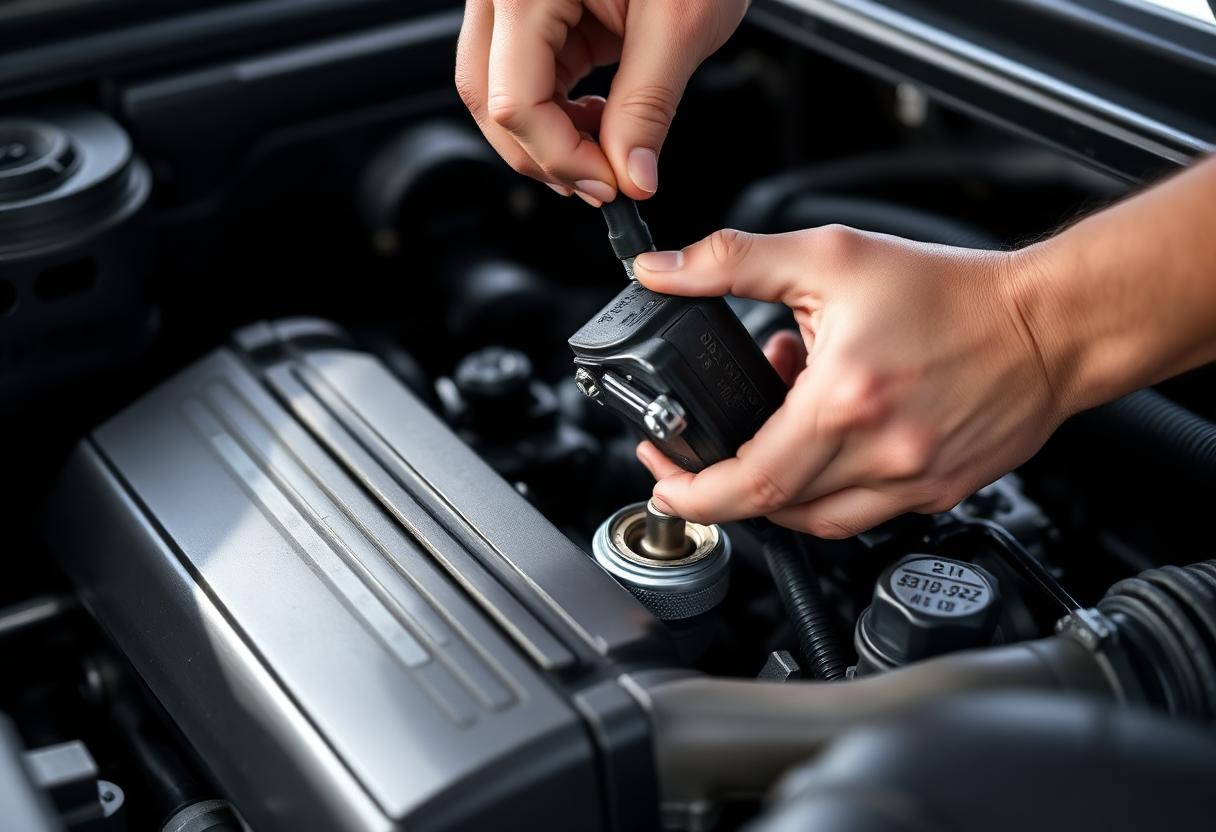
- Swap-test the ignition coil. This is the highest-value test in the whole procedure and it costs nothing. On a cylinder-specific code such as P0303, swap the coil from cylinder 3 with the one from cylinder 1. Clear the codes, drive until the fault returns, and re-scan. If the code follows the coil to cylinder 1, you have found your failed part. If it stays on cylinder 3, the coil is fine and you have eliminated it for free.
- Pull the spark plug and read it. Remove the plug from the affected cylinder and inspect it against a known-good one. A plug soaked in oil suggests worn valve stem seals or piston rings. A plug that is black and sooty suggests a rich mixture. One that is white and blistered suggests running lean or overheating. A cracked insulator or an electrode worn to a nub is your answer outright. Our spark plug replacement guide covers gapping and torque, and the coil and plug replacement walkthrough covers doing the whole set properly.
- Swap-test or listen to the fuel injector. If spark checks out, move to fuel. With the engine running, put a stethoscope or the tip of a long screwdriver against each injector and listen. A healthy injector makes a steady, crisp clicking. A dead or clogged one is silent or irregular. On many engines you can also swap injectors between cylinders the same way you swapped the coil and see whether the code moves.
- Check for vacuum leaks. Unmetered air entering after the mass airflow sensor leans out the mixture and causes misfires, often with a lean code such as P0171 alongside. With the engine idling, briefly spray a small amount of carb cleaner around intake gaskets, vacuum lines and the throttle body while listening to the idle. A momentary rise or change in engine speed tells you air is being drawn in there. Keep the spray away from hot exhaust and ignition components, and keep a fire extinguisher within reach.
- Run a compression test. If spark, fuel and air all check out, the remaining variable is mechanical. Remove all the plugs, thread the compression tester into the suspect cylinder, hold the throttle open and crank the engine for several revolutions. Compare every cylinder. What matters is not the absolute number so much as the spread: one cylinder markedly lower than the rest points to a burnt valve, worn rings, or a head gasket problem. That is where a DIY misfire diagnosis usually ends and a professional repair begins.
The four causes, ranked by how often they turn out to be the answer
- Ignition (most common). Failed coil, worn or fouled spark plug, cracked boot. Cheapest to test, cheapest to fix, and the answer most of the time.
- Air. Vacuum leaks from cracked hoses or failed intake gaskets, or a dirty mass airflow sensor feeding the computer bad numbers.
- Fuel. Clogged or dead injector, weak fuel pump, restricted filter. Usually affects multiple cylinders when it is a supply problem.
- Compression (least common, most expensive). Burnt valve, worn rings, head gasket, or a jumped timing belt or chain.
Common mistakes
- Replacing all the coils at once. A swap test costs nothing and identifies the bad one precisely. Buying a full set on suspicion is an expensive guess.
- Clearing the code and hoping. The misfire will return, and clearing also wipes the freeze frame data that told you when it happens.
- Continuing to drive with a flashing light. This is the mistake that turns a cheap repair into an expensive one.
- Ignoring oil in the spark plug wells. Oil-fouled plugs are a symptom, not the disease. Replace the valve cover gasket or the plug well seals or you will be back in a few thousand miles.
- Not torquing spark plugs properly. Overtightening damages the cylinder head threads. Undertightening causes poor heat transfer and, eventually, another misfire. Use a torque wrench.
- Assuming P0300 means one bad part. A random misfire code usually points to something shared across cylinders, not a single component.
Frequently asked questions
Can I drive with a misfire?
If the check engine light is steady and the car drives more or less normally, a short, gentle drive to a shop is generally acceptable. If the light is flashing, no. The risk of catalytic converter damage is real and it accumulates quickly.
Why does my misfire only happen when the engine is cold?
Cold-only misfires often point to worn spark plugs, weak coils that recover once warm, or a fuel mixture problem during the warm-up phase when the computer runs a preset enrichment strategy rather than using oxygen sensor feedback.
Will new spark plugs fix a misfire?
Often, but not always. Plugs are cheap and wear out, so they are a reasonable first move if yours are near the end of their service interval. If they are recent and in good condition, replacing them again just delays the real diagnosis.
Can bad gas cause a misfire?
Contaminated fuel or water in the tank can, though it is far less common than people assume. If a misfire appeared immediately after a fill-up and affects several cylinders at once, it is worth considering, but check ignition components first.
When to call a professional
Hand it over if:
- Your compression test shows one cylinder significantly below the others
- You suspect a head gasket, indicated by white exhaust smoke, coolant loss with no visible leak, or a milky residue under the oil cap
- The misfire appeared alongside a timing belt or chain noise, or after the engine was run low on oil
- You have worked through spark, fuel and air and the misfire persists
- The vehicle needs a fuel rail or high-pressure direct injection component opened, which involves fuel under significant pressure
Parts for an ignition-side fix are usually inexpensive, while internal engine work is in a completely different category, though prices vary considerably by vehicle and region. The compression test is what tells you which of those two worlds you are in, so it is worth doing before authorising any large repair.