This post contains affiliate links.
A failing catalytic converter almost always announces itself the same way: a check engine light with a P0420 or P0430 code, a sulfur or rotten-egg smell from the exhaust, a rattle when the engine is cold, or a noticeable drop in power. Replacing it isn’t a huge job mechanically, but it’s one of the few repairs where getting the legal and diagnostic steps wrong can cost you a failed emissions test or a fine. Here’s how to do it correctly.
Is It Really the Catalytic Converter?
Before buying a new converter, rule out the cheaper causes of a P0420/P0430 code. Both codes mean the engine computer sees the oxygen sensor readings before and after the converter and doesn’t see enough of a difference — which it interprets as reduced converter efficiency. But the same code can appear from:
- A failing or lazy downstream O2 sensor (much cheaper to replace — see our O2 sensor replacement guide)
- An exhaust leak upstream of the converter, which throws off the sensor readings
- A rich or lean running condition (bad injectors, vacuum leak, worn spark plugs) that’s slowly cooking the converter — see our P0171 lean condition guide if you’re also seeing that code
- A physically damaged converter — cracked, clogged, or with a rattling internal honeycomb (shake the exhaust pipe near the converter; loose rattling debris is a clear sign)
Pull the full code, not just the generic description, and check freeze frame data with a scan tool. A budget OBD2 reader will show the code; a mid-range scanner will show live O2 sensor voltage switching, which tells you whether the converter itself is dead or something upstream is causing it. Our OBD2 scanner comparison covers which tools show that level of detail.
Know the Emissions Law Before You Buy a Converter
This is the part people skip and regret. In the United States, catalytic converters are regulated by the EPA and, in some states (California, and states that follow CARB rules), by stricter state standards:
- Federal (EPA) converters are legal for most states but not for CARB states unless specifically labeled.
- CARB-compliant converters cost more but are required in California, Colorado, New York, and several other states that follow CARB rules — check your state’s current list before buying.
- Universal-fit converters are cheaper but may not carry the correct EPA/CARB certification for your vehicle and state — installing an uncertified converter is illegal in many jurisdictions and can fail an emissions inspection or a police check.
- Never install a used or salvage converter to save money on emissions-legal grounds — it usually isn’t certified for reuse and may already be failing.
Check your vehicle’s VIN and your state’s emissions rules before ordering a part. When in doubt, a dealership or emissions-focused repair shop can confirm exactly which converter is legal for your car and ZIP code.
Tools and Materials You’ll Need
- New catalytic converter (direct-fit or universal, correct emissions certification for your state)
- Jack and jack stands (or a lift)
- Penetrating oil (exhaust bolts are notorious for rusting solid)
- Oxygen sensor socket (slotted socket to clear the sensor’s wire)
- Ratchet, breaker bar, and a socket set
- New gaskets and hardware (springs, bolts, or clamps depending on your setup)
- Anti-seize compound for the new bolts
- Safety glasses and gloves
- Torque wrench
How to Replace a Catalytic Converter
1. Let the Exhaust Cool Completely
Never work on an exhaust system right after driving. Let the car sit for at least an hour so the converter and pipes are cool to the touch — they can exceed 800°F during normal operation.
2. Raise and Secure the Vehicle
Lift the car and support it on jack stands rated for the vehicle’s weight. Never work under a car supported only by a jack.
3. Disconnect the Oxygen Sensors
Locate the upstream and downstream O2 sensors threaded into the converter (or the pipe just before/after it). Unplug their electrical connectors, then remove them with an O2 sensor socket. Spray penetrating oil first if they haven’t been out before — they often seize.
4. Spray Down the Exhaust Bolts or Clamps
Soak the flange bolts or clamps on both sides of the converter with penetrating oil and give it 10-15 minutes to work in, especially on rusty or high-mileage vehicles.
5. Remove the Old Converter
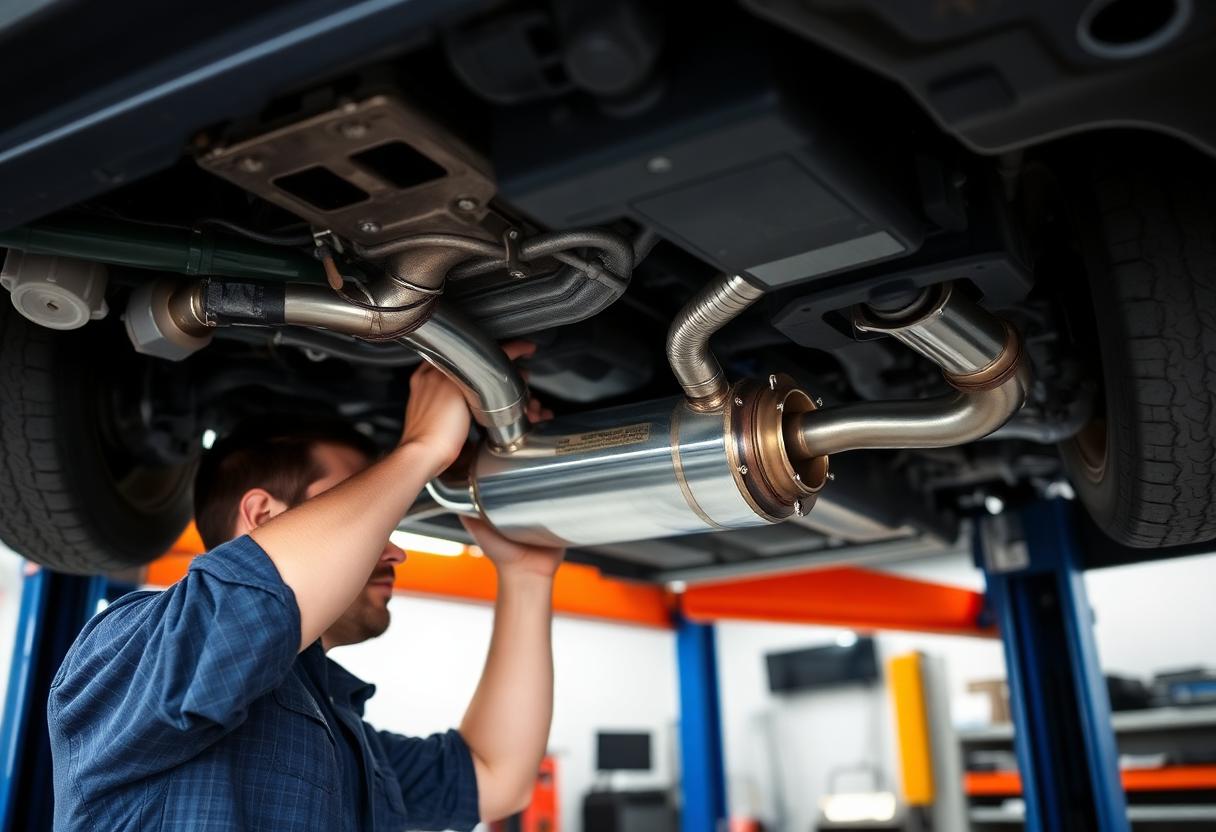
Support the converter’s weight with one hand or a jack, then remove the fasteners on both flanges. Some vehicles use spring-loaded bolts, others use a simple clamp-and-gasket joint — work whichever your car has. Once free, lower the old converter out.
6. Compare and Install the New Converter
Check that the new converter matches the old one’s shape, pipe diameter, and sensor bung locations before installing. Fit new gaskets at both flanges, position the converter, and hand-thread all bolts before tightening any of them fully — this keeps the flanges aligned and avoids cracking the new unit.
7. Torque Everything to Spec
Tighten the flange bolts in a criss-cross pattern to your vehicle’s specified torque (check your repair manual — over-tightening can crack the gasket seal, under-tightening causes exhaust leaks and new codes).
8. Reinstall the Oxygen Sensors
Apply a small amount of anti-seize to the sensor threads (most new sensors come pre-coated), thread them into the new converter by hand first to avoid cross-threading, then torque to spec and reconnect the electrical connectors.
9. Clear the Code and Test Drive
Use your scan tool to clear the stored P0420/P0430 code. Start the engine and check for exhaust leaks or rattling. Then drive through a normal mix of city and highway driving — the computer needs several drive cycles to run its catalyst monitor and confirm the fix before the check engine light would return if there were still a problem.
Common Mistakes to Avoid
- Replacing the converter without diagnosing the root cause — if a misfire, rich condition, or oil-burning engine is what killed the original converter, the new one will fail too unless you fix the underlying issue first.
- Buying an uncertified or wrong-fit converter to save money — this can fail inspection or damage engine performance.
- Skipping new gaskets — reusing old, crushed gaskets is one of the most common causes of a new exhaust leak right after installation.
- Over-torquing bolts to try to stop a leak — this often cracks the flange or gasket instead of sealing it.
- Not clearing and completing drive cycles — some inspection stations will reject a car whose monitors haven’t run yet, even with no active code.
FAQ
How much does catalytic converter replacement cost?
Parts and labor vary widely by vehicle and converter type (universal vs. direct-fit vs. CARB-certified), and prices change over time — get a quote from a local shop for your specific vehicle rather than relying on a fixed number.
Can I drive with a P0420 code?
Short trips at low speed usually won’t strand you, but a failing converter can eventually restrict exhaust flow enough to hurt performance and fuel economy, and driving with the check engine light on means you won’t notice a second, more serious code if one appears. Get it diagnosed promptly rather than ignoring it.
Do I need a professional shop, or can I do this myself?
If you have jack stands, basic hand tools, and comfort working under a vehicle, this is a manageable driveway job on most cars. Rusted-solid exhaust bolts, welded (rather than bolted) joints, or a vehicle with a complex exhaust routing are good reasons to hand it to a shop instead.
Will a new converter guarantee the check engine light stays off?
Only if the original failure cause is also fixed. A new converter installed on a car with an untreated misfire or rich-running condition will often set the same code again within weeks.
When to Call a Professional
Get a shop involved if: the old converter’s pipes are welded rather than bolted (cutting and welding exhaust requires specialized tools), you’re not confident identifying your state’s CARB/EPA requirements, the bolts are rusted so badly that they’re shearing off, or the code keeps returning after a proper replacement — that points to an unresolved engine issue that needs a full diagnostic, not another part swap.