This post contains affiliate links.
The P0442 code is a common OBD2 diagnostic trouble code that indicates a small leak has been detected in your vehicle’s evaporative emission control (EVAP) system. This system prevents fuel vapors from escaping into the atmosphere. While a P0442 code is not typically an emergency, it can cause your check engine light to illuminate and may lead to failed emissions tests. In this guide, we’ll explain what the code means, common symptoms, the most likely causes, and step-by-step instructions to diagnose and fix it yourself. If your scanner shows P0455 instead, that’s the larger-leak version of the same code family and is usually easier to find by eye — see our P0455 vs. P0442 comparison if you’re not sure which one applies.
What Does the P0442 Code Mean?
The P0442 code specifically means the engine control module (ECM) has detected a small leak (0.020 to 0.040 inches) in the EVAP system. The EVAP system includes the fuel tank, gas cap, charcoal canister, purge valve, vent valve, and connecting hoses. The system is sealed and monitored for leaks by the ECM using a combination of pressure sensors and vacuum tests. A small leak often triggers the code, but it may not cause noticeable drivability issues.
Symptoms of a P0442 Code
- Check Engine Light (CEL) illuminated
- No noticeable drivability problems in most cases
- Possible faint fuel odor, especially after refueling
- Failed emissions test (smog check)
In rare cases, a larger leak may cause a rough idle or hesitation, but with a small leak, the car usually drives fine.
Common Causes of P0442 (Ranked by Likelihood)
- Loose or faulty gas cap – This is the #1 cause. A gas cap that isn’t tightened properly, has a damaged seal, or is cracked can allow vapors to escape.
- Damaged EVAP hoses – Rubber hoses connecting the fuel tank, canister, and valves can crack, especially with age and heat.
- Faulty purge valve – The purge valve (solenoid) may stick open or closed, causing a leak.
- Faulty vent valve – The vent valve (solenoid) that seals the system can fail open or closed.
- Cracked charcoal canister – The canister itself can crack, leading to a leak.
- Leaking fuel tank or filler neck – Less common, but possible if the tank or neck is damaged.
Tools and Materials You’ll Need
- OBD2 scanner (code reader)
- Smoke machine (EVAP smoke tester) – can be rented from auto parts stores
- Hand tools (screwdrivers, pliers, socket set)
- Replacement gas cap (if needed)
- Replacement hoses, purge valve, or vent valve (as diagnosed)
- Safety glasses and gloves
How to Diagnose and Fix P0442: Step-by-Step
Step 1: Check and Tighten the Gas Cap
Start with the easiest fix. Remove the gas cap and inspect the rubber seal for cracks or debris. Reinstall it tightly until you hear at least three clicks. Clear the code with your OBD2 scanner and drive the car for a few days. If the code doesn’t return, you’re done. If it does, proceed.
Step 2: Inspect EVAP Hoses Visually
With the engine off, look for cracked, disconnected, or melted hoses in the EVAP system. Common areas include near the fuel tank, charcoal canister (usually near the rear of the car), and the engine bay. Replace any damaged hoses with new ones of the same diameter. Clear the code and test.
Step 3: Use a Smoke Machine to Find the Leak
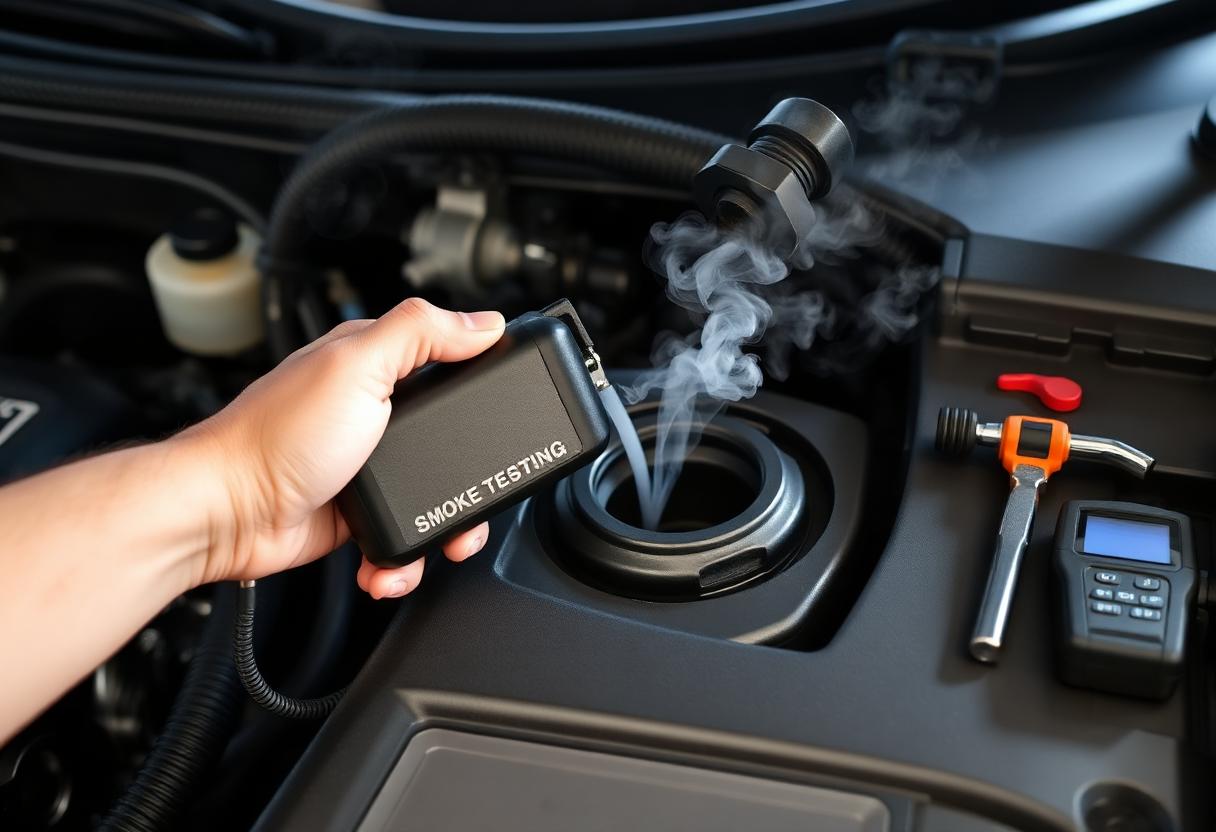
If the leak isn’t obvious, a smoke test is the best way to pinpoint it. Connect the smoke machine to a service port in the EVAP system (often near the purge valve or fuel filler neck). Seal the system by plugging the vent (or using the machine’s adapter). Turn on the smoke machine and watch for smoke escaping. Common leak points: hose connections, purge valve, vent valve, canister, or gas cap seal. Mark the leak location.
Step 4: Repair the Leak
- Gas cap: Replace with an OEM or high-quality aftermarket cap.
- Hoses: Cut out the damaged section and replace with new hose, using clamps if needed.
- Purge valve: Remove and test with a multimeter for resistance (typically 20-30 ohms). If faulty, replace. DIY difficulty: moderate.
- Vent valve: Similar to purge valve. Test and replace if stuck open or closed. Difficulty: moderate.
- Charcoal canister: If cracked, replace the canister. This may require dropping the tank or removing a bracket. Difficulty: moderate to hard.
Step 5: Clear the Code and Test Drive
After repairs, use your OBD2 scanner to clear the P0442 code. Drive the car for at least 20-30 minutes under various conditions (city and highway). If the code does not return, the repair is successful. If it does, re-check for additional leaks.
Troubleshooting and Common Mistakes
- Not tightening the gas cap enough: Always tighten until you hear clicks. A loose cap is the most common cause.
- Using a cheap gas cap: Aftermarket caps may not seal properly. Stick with OEM or quality brands.
- Ignoring other EVAP codes: P0442 often appears with other codes like P0440, P0446, or P0455. Address all codes. If you also see a P0171 system-too-lean code, a shared vacuum leak may be the culprit for both.
- Skipping the smoke test: Visual inspection alone may miss small cracks. A smoke machine is the most reliable diagnostic tool.
FAQ
Is it safe to drive with a P0442 code?
Yes, it is generally safe to drive with a small EVAP leak. The code does not affect engine performance or safety significantly. However, you may fail an emissions test, and fuel vapors are released into the environment. It’s best to fix it soon.
How much does it cost to fix a P0442 code?
Cost varies widely. A new gas cap costs $10–$20. A replacement hose is under $50. If you need a new purge valve or vent valve, parts range from $30–$100. Labor can add $100–$200 if you go to a shop. DIY saves on labor.
Can a bad gas cap cause P0442?
Absolutely. A loose, cracked, or worn gas cap is the most common cause of P0442. Always check the gas cap first.
Will a P0442 code eventually go away on its own?
No, the code will not clear itself until the leak is fixed and the system passes a self-test. You must repair the leak and then clear the code with a scanner.
When to Call a Professional
If you’ve checked the gas cap, inspected hoses, and performed a smoke test but can’t find the leak, or if the repair involves dropping the fuel tank or replacing the canister, consider taking the car to a professional mechanic. They have advanced diagnostic tools and experience with tricky EVAP leaks. Also, if you are not comfortable working on your car, it’s always safer to ask for help.
Related OBD2 Code Guides
- P0420 Code: What It Means for Your Civic, Accord, Camry, RAV4, or F-150
- P0300 Code: Random Misfire — Causes and Fixes
- P0171 Code: System Too Lean — Causes and Fixes
- P0455 Code: Large EVAP Leak Causes and Fixes
- How to Fix an EVAP Leak (P0455 & P0442 Explained)
- P0128 Code: Coolant Thermostat Issue — Causes and Fixes