This post contains affiliate links.
Your Check Engine Light came on, you scanned it, and got P0128. Unlike a misfire or a lean condition, this one probably hasn’t changed how your car drives at all — and that’s actually the first useful clue about what’s going on.
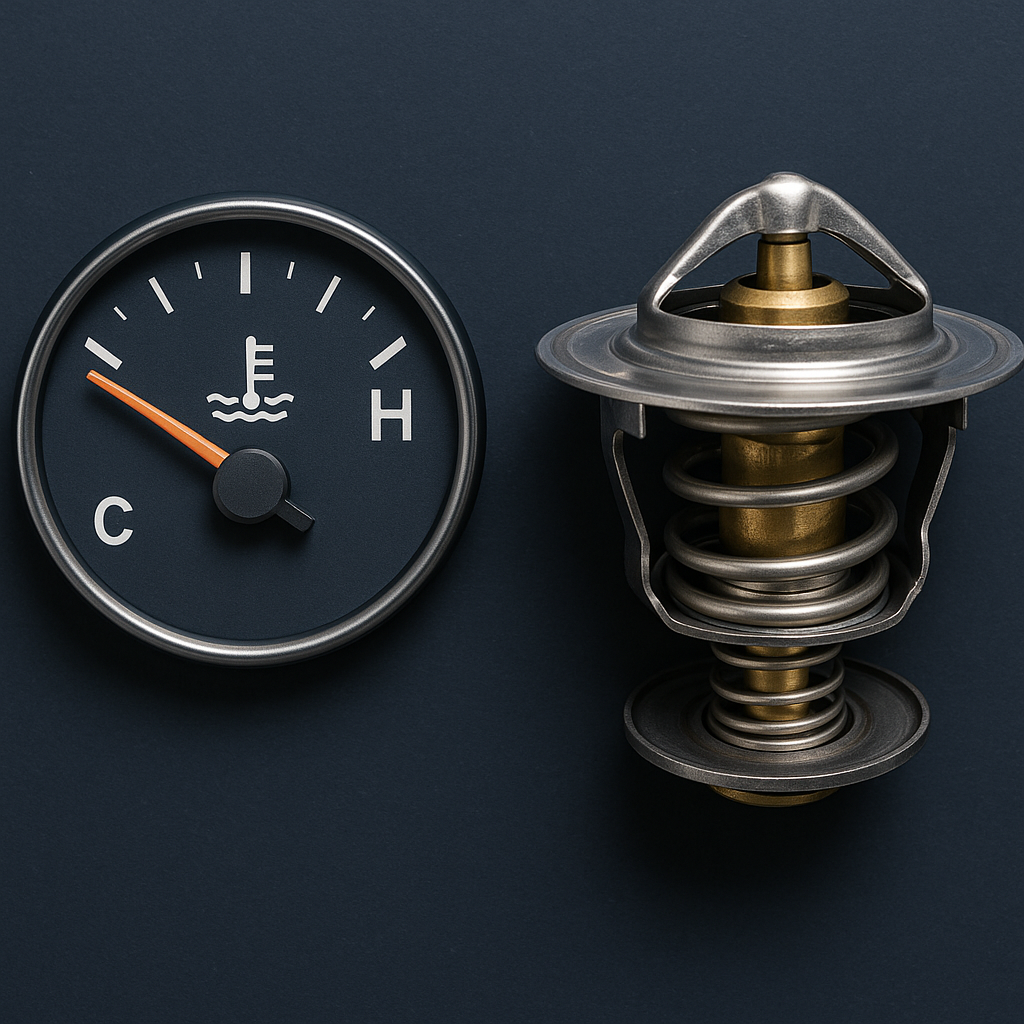
P0128 means your engine coolant temperature is taking too long to reach the thermostat’s regulating temperature — in plain terms, your engine is running cooler than it should for normal operation, most often because the thermostat is stuck open or failing. That’s the core of it. Below is exactly what this means for your Honda Civic, Honda Accord, Toyota Camry, Toyota RAV4, or Ford F-150, and how to diagnose it properly.
This is a low-drama code in the sense that it won’t strand you or damage your engine quickly. But it’s not one to ignore either — a stuck-open thermostat quietly costs you fuel economy, heater performance, and emissions control, and it’s usually a cheap, straightforward fix.
What Is the P0128 Code, Really?
Your engine’s thermostat is a temperature-sensitive valve that stays closed while the engine warms up, forcing coolant to circulate only through the engine block so it heats up quickly. Once the coolant reaches the thermostat’s rated opening temperature — typically somewhere between 180°F and 195°F (82°C–90°C) depending on the vehicle — it opens, allowing coolant to flow through the radiator and regulate temperature going forward.
The ECM monitors how long it takes the engine to reach its expected operating temperature after startup, using the coolant temperature sensor. If the engine takes significantly longer than expected — or never quite gets there — the ECM sets P0128. This almost always means the thermostat is stuck partially or fully open, so coolant is circulating through the radiator too early and cooling the engine down before it can properly warm up.
How P0128 Shows Up Differently Across These Five Vehicles
The thermostat mechanism is nearly identical across all five of these vehicles, so the diagnostic differences come down to known part reliability and a couple of vehicle-specific quirks.
Honda Civic (2006–Present)
Civic thermostats are generally reliable, but they do wear out with age like any mechanical part, typically somewhere in the 80,000–120,000 mile range. When they fail on a Civic, they most often fail stuck open rather than stuck closed, which is exactly the P0128 scenario. Low coolant level or a coolant that hasn’t been changed in years (allowing sediment buildup) can also affect thermostat operation.
Honda Accord (2003–Present)
Similar story to the Civic — the thermostat itself is a wear item with a long but finite service life. On V6 Accords, also verify the coolant temperature sensor is reading accurately, since a sensor giving falsely low readings can mimic a stuck-open thermostat without the thermostat actually being at fault.
Toyota Camry (2002–Present)
Toyota thermostats on both the 2AZ-FE four-cylinder and 2GR-FE V6 Camry are known for long service life, but they do eventually fail, and stuck-open is the more common failure mode. If your Camry’s heater seems to blow cooler air than it used to, or takes noticeably longer to warm up in winter, that’s a strong companion symptom to a stuck-open thermostat alongside P0128.
Toyota RAV4 (2006–Present)
Same engine families and same failure pattern as the Camry. On RAV4 Hybrid models specifically, be aware that the engine cycles on and off during normal driving, which can complicate how the ECM tracks warm-up time — a genuine thermostat problem and a normal hybrid operating pattern can sometimes look similar at a glance, so pay attention to whether the engine ever reaches full operating temperature during extended driving, not just how quickly it warms up after a cold start.
Ford F-150 (2004–Present)
Across the 5.4L Triton, 5.0L Coyote, and EcoBoost engines, F-150 thermostats are a routine wear item. High-mileage trucks that have never had a coolant system service are more prone to thermostat sticking issues from accumulated deposits. On EcoBoost trucks specifically, also check that the electric auxiliary coolant pump (used to help cool the turbochargers) hasn’t failed, since coolant flow issues here can occasionally contribute to slow warm-up in ways that are easy to misattribute to the thermostat alone.
Step-by-Step Diagnostic Process for P0128
This is one of the more straightforward codes to diagnose. Work through these steps in order.
Step 1: Check Coolant Level and Condition
Before assuming a thermostat failure, check that your coolant is at the proper level and hasn’t degraded. Low coolant, a heavy mix of the wrong coolant type, or old coolant full of sediment can all interfere with proper heat regulation and sensor accuracy. Top off or flush as needed and see if the code returns before moving further.
Step 2: Monitor Warm-Up Time with a Scanner
With a scanner that shows live coolant temperature data, do a cold start and watch how the temperature climbs. A healthy engine should reach normal operating temperature (usually around 195°F–220°F depending on the vehicle) within roughly 5–10 minutes of driving, sooner in warm weather. If the temperature climbs very slowly, plateaus well below normal operating range, or takes an unusually long time, that strongly points to a stuck-open thermostat.
Step 3: Feel the Radiator Hoses
With the engine cold, start it and carefully feel the upper radiator hose (careful — hot components after warm-up). On a properly functioning thermostat, the upper hose should stay cool for the first several minutes while the engine warms up, then get hot relatively quickly once the thermostat opens. If the upper hose gets warm almost immediately after starting, coolant is flowing through the radiator before it should, which is a hands-on confirmation of a stuck-open thermostat.
Step 4: Check the Coolant Temperature Sensor
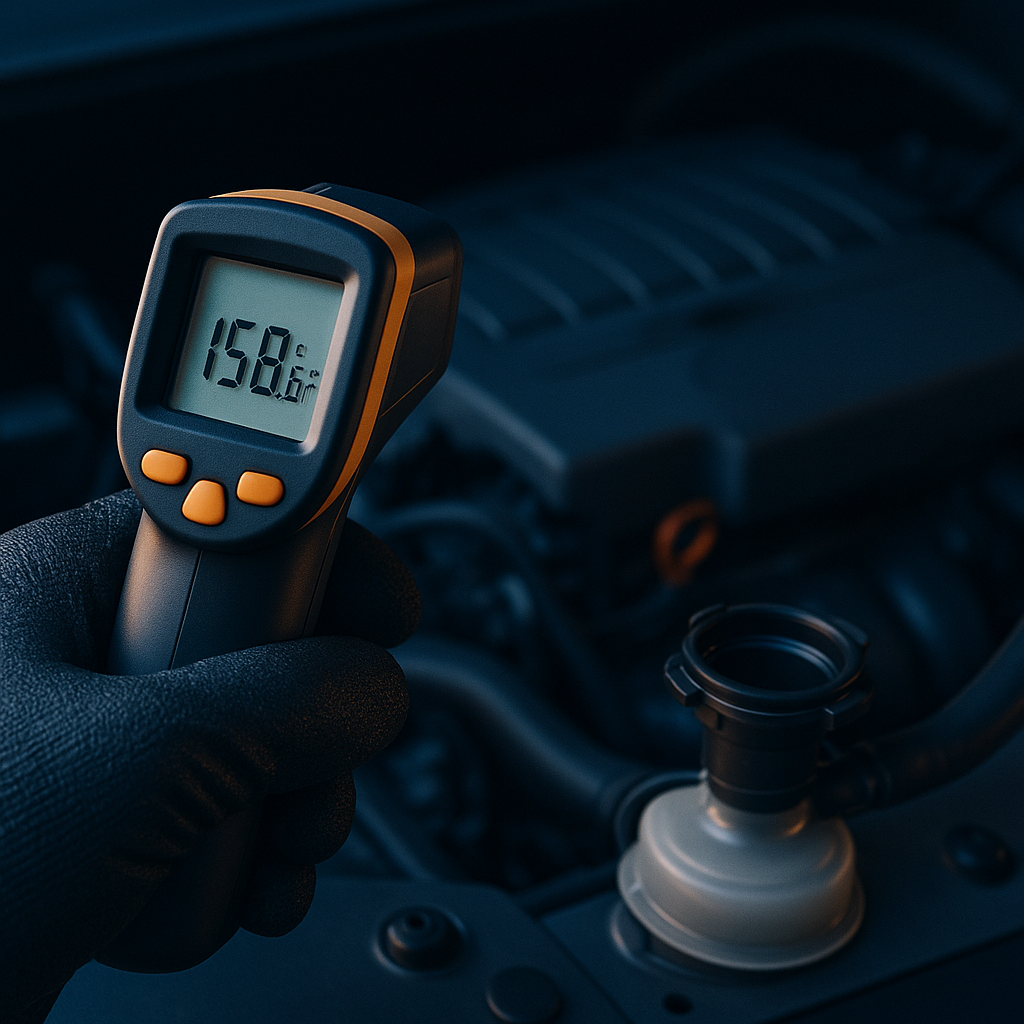
If warm-up time seems abnormal but the hose test suggests the thermostat is behaving normally, the coolant temperature sensor itself may be giving inaccurate readings to the ECM. Compare the scanner’s reported coolant temperature to an infrared thermometer reading taken directly off the engine block or thermostat housing. A significant mismatch points to a sensor problem rather than an actual thermostat failure.
Step 5: Replace the Thermostat
If the diagnosis points to the thermostat, replacement is usually straightforward and inexpensive on all five of these vehicles. Always replace the thermostat gasket or O-ring at the same time, and use the OEM-spec temperature rating for your specific vehicle — using the wrong rated thermostat can cause the same code to reappear even with a brand-new part.
Estimated Repair Costs by Cause
This is one of the more affordable codes to resolve. DIY thermostat replacement is very achievable on all five of these vehicles with basic tools.
Common Mistakes People Make With P0128
Ignoring It Because It “Drives Fine”
P0128 rarely changes how the car feels to drive, which is exactly why it gets ignored — but it quietly costs fuel economy and emissions performance.
Wrong Temperature Rating
Installing a thermostat rated for the wrong temperature can trigger the exact same code with a brand-new part. Match your vehicle’s spec.
Skipping the Air Bleed
Trapped air after a coolant service causes erratic temperature readings that can mimic or reintroduce the code.
Not Ruling Out the Sensor
A bad coolant temp sensor can look identical to a stuck thermostat on a scanner. Skipping this check risks replacing the wrong part.
Overlooking a Failed Heater
Weak heater output is a strong companion symptom to a stuck-open thermostat and is easy to dismiss as “just winter.”
Reusing an Old Gasket
Reusing a worn gasket or O-ring during thermostat replacement invites a coolant leak that undoes the whole repair.
Can You Drive with P0128?
Yes, comfortably. This is one of the lowest-urgency codes on the OBD2 spectrum. A stuck-open thermostat doesn’t put your engine at risk of overheating or sudden failure — if anything, it errs on the side of running too cool, which is inefficient but not dangerous.
That said, don’t let it sit indefinitely. Running consistently below operating temperature reduces fuel economy, can leave your emissions system underperforming (which may eventually contribute to other codes or an inspection failure), and in cold climates means a heater that never quite gets warm. It’s a “fix on your own schedule” code, not an emergency, but it’s worth scheduling.
Frequently Asked Questions About P0128
Will P0128 cause my engine to overheat?
No — it’s the opposite problem. P0128 means the engine is running cooler than expected, typically from a thermostat stuck open, which lets coolant circulate through the radiator too early. This doesn’t risk overheating; if anything, it’s the more benign failure direction for a thermostat to fail in.
Can low coolant cause P0128?
It can contribute. Low coolant levels affect how efficiently heat transfers and can throw off temperature sensor readings, sometimes mimicking a slow warm-up pattern. Always check and top off coolant as your first step before assuming a mechanical thermostat failure.
Why does my heater blow cold air with this code?
A weak or cold-blowing heater is a very common companion symptom. Your heater core relies on hot coolant to warm the cabin air, and if the thermostat is stuck open, the coolant never gets hot enough to provide good heater performance — especially noticeable in colder weather or at idle.
Does P0128 affect fuel economy?
Yes, measurably. The ECM runs a richer fuel mixture during engine warm-up, and if the engine never fully reaches operating temperature, it can stay in that less efficient mode longer than it should, or run generally cooler than the calibration expects — both of which modestly reduce fuel economy over time.
Is it safe to just clear the code without fixing anything?
You can clear it, but if the thermostat is genuinely stuck open, the code will return once the ECM completes another drive cycle and sees the same slow warm-up pattern. Since the fix is usually inexpensive, it’s rarely worth the repeated scanning and re-clearing instead of just addressing it.
How long does a thermostat typically last?
There’s no fixed mileage, but somewhere in the 80,000–120,000 mile range is a common window for thermostat wear across these vehicles, especially if the cooling system hasn’t had regular maintenance. Vehicles with well-maintained coolant systems tend to see thermostats last longer.
Diagnosing Another Code?
Fixopedia covers OBD2 diagnostic trouble codes for the Civic, Accord, Camry, RAV4, and F-150 with the same clear, step-by-step approach. Browse more codes to keep troubleshooting.
Quick Summary and Your Next Step
P0128 means your engine is warming up too slowly, almost always because of a thermostat stuck open. Here’s the diagnostic path condensed:
- Check coolant level and condition first — low or old coolant can interfere with proper heat regulation.
- Monitor warm-up time with a scanner — a healthy engine reaches operating temperature within about 5–10 minutes of driving.
- Feel the radiator hoses — a fast, free test that directly confirms whether the thermostat is opening too early.
- Rule out the coolant temperature sensor — a bad sensor can mimic a stuck thermostat without one actually being present.
- Replace the thermostat if confirmed — inexpensive, DIY-friendly, and the fix that resolves the vast majority of P0128 cases.
- Bleed the cooling system after any coolant work — trapped air can bring the code right back even with new parts.
This is one of the friendlier codes to deal with — cheap parts, straightforward diagnosis, and no risk of stranding you on the side of the road. Take care of it on your own timeline, and you’ll get your fuel economy and heater performance back to where they should be.