This post contains affiliate links.
A dead car battery can leave you stranded at the worst possible time. Knowing how to test and replace your battery yourself saves money and gives you peace of mind. This guide covers everything from checking battery voltage with a multimeter to safely swapping in a new battery and disposing of the old one.
Tools and Materials You’ll Need
- Digital multimeter (set to DC volts, 20V scale)
- Safety glasses and gloves
- Wrench or socket set (typically 10mm or 13mm for terminals)
- Wire brush or battery terminal cleaner
- Baking soda and water (for cleaning corrosion)
- Anti-corrosion spray or dielectric grease
- Memory saver (optional, to keep radio and ECU settings)
- New battery (check your owner’s manual for group size, CCA, and terminal location)
How to Test Your Car Battery
Visual Inspection
Before testing, check for obvious issues: cracked case, swollen sides, loose or corroded terminals, or leaking fluid. If you see any of these, replace the battery immediately.
Multimeter Voltage Test
- Turn off the engine and all accessories (lights, radio, etc.).
- Set your multimeter to DC volts, 20V range.
- Connect the red probe to the positive (+) terminal and the black probe to the negative (-) terminal.
- Read the voltage:
- 12.6V or higher – fully charged.
- 12.4 – 12.5V – about 75% charged.
- 12.2 – 12.3V – about 50% charged, may need charging or replacement.
- Below 12.0V – severely discharged or sulfated; likely needs replacement.
Load Test (Cranking Test)
A voltage reading alone doesn’t tell you if the battery can deliver enough current to start the engine. Have a helper crank the engine for about 5 seconds while you watch the multimeter:
- Voltage should not drop below 10.5V during cranking.
- If it drops below 10V, the battery is weak and should be replaced.
Many auto parts stores offer free load testing with a dedicated tester – a good option if you’re unsure.
Signs Your Battery Needs Replacement
- Engine cranks slowly or struggles to start.
- Dashboard lights dim when starting.
- Battery is more than 3–5 years old.
- Swollen or bloated battery case (often from heat).
- Frequent need for jump-starts.
- Corrosion buildup on terminals.
Step-by-Step Car Battery Replacement
Step 1: Park Safely and Prepare
Park on a level surface, turn off the engine, and remove the keys. Open the hood and locate the battery. Identify the positive (+) and negative (-) terminals (positive is usually red, negative black).
Step 2: Use a Memory Saver (Optional but Recommended)
If you want to keep your radio presets, clock, and ECU memory, connect a memory saver (a small 9V battery or OBD2 plug) to the cigarette lighter or OBD2 port before disconnecting the battery. Follow the device instructions.
Step 3: Disconnect the Negative Terminal First
- Use a wrench to loosen the nut on the negative (-) terminal clamp.
- Twist and pull the clamp off the terminal. If stuck, use a terminal puller or gently pry with a screwdriver (avoid prying on the battery case).
- Secure the cable away from the battery so it doesn’t accidentally touch.
Step 4: Disconnect the Positive Terminal
- Loosen the nut on the positive (+) terminal clamp.
- Remove the clamp and move the cable aside.
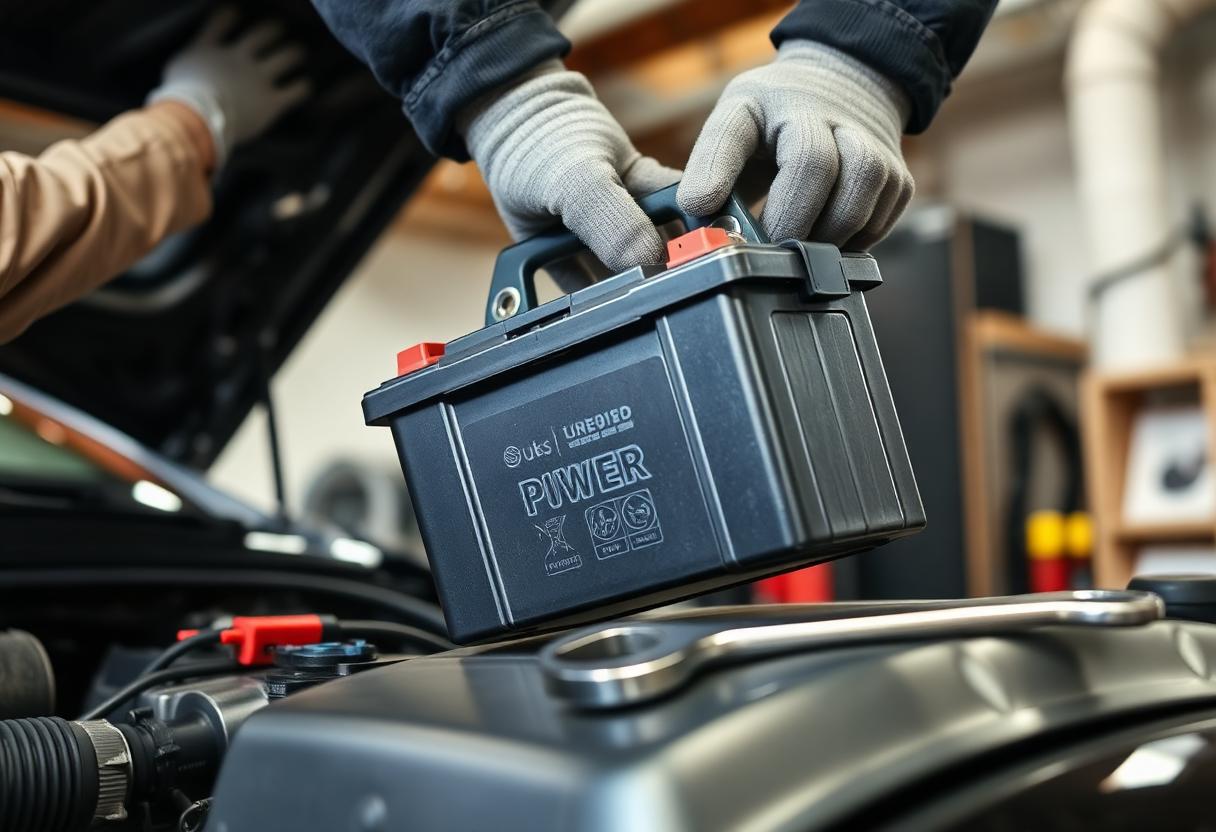
Step 5: Remove the Old Battery
- If the battery is held by a bracket or clamp, remove it with a wrench.
- Lift the battery straight out. Car batteries are heavy (30–50 lbs), so use proper lifting technique – bend at your knees, not your back.
- Place the old battery on a flat, non-conductive surface.
Step 6: Clean the Battery Tray and Terminals
- Inspect the tray for corrosion or debris. Clean with a mixture of baking soda and water (1 tablespoon baking soda per cup of water) and a rag. Rinse with clean water and dry.
- Clean the cable clamps with a wire brush until shiny. If heavily corroded, replace the clamps.
Step 7: Install the New Battery
- Place the new battery in the tray, ensuring the positive terminal aligns with the positive cable (usually red).
- Reinstall any hold-down bracket or clamp.
Step 8: Connect the Positive Terminal First
- Slide the positive clamp onto the positive terminal. Tighten the nut firmly, but don’t overtighten – just snug.
- Do the same for the negative terminal.
Step 9: Apply Anti-Corrosion Protection
Spray terminal protector or apply a thin layer of dielectric grease on the terminals to prevent future corrosion.
Step 10: Start the Engine and Test
- Start the engine. It should crank quickly and smoothly.
- Check that all electronics work (lights, radio, etc.). If you didn’t use a memory saver, you may need to reset the clock and radio presets.
- Do a final voltage test: with the engine running, the multimeter should read between 13.7V and 14.7V, indicating the alternator is charging.
How to Dispose of the Old Battery
Car batteries contain lead and acid and are hazardous waste. Never throw one in the trash. Most auto parts stores (like AutoZone, O’Reilly, Advance Auto Parts) accept old batteries for recycling, often with a small core deposit refund. You can also take them to a local recycling center or hazardous waste facility.
Troubleshooting and Common Mistakes
- Battery won’t fit: Double-check the group size and terminal orientation before buying.
- Terminal clamp won’t tighten: The clamp may be stretched or the terminal tapered. Replace the clamp if needed.
- Car won’t start after replacement: Check that both terminals are clean and tight. If still no start, the battery may be dead (test voltage) or there’s another issue – if the engine cranks strongly but runs rough once started, check the ignition side with our spark plug replacement guide.
- Spark when connecting terminals: Ensure the ignition and all accessories are off. Always connect positive first, then negative.
FAQ
How often should I replace my car battery?
Typically every 3–5 years, but it depends on climate, driving habits, and battery quality. Test voltage annually after three years.
Can I replace a car battery myself?
Yes, it’s a straightforward DIY task for most vehicles. Just follow safety precautions and use the correct battery size.
What does CCA mean on a battery?
Cold Cranking Amps – a measure of the battery’s ability to start an engine in cold temperatures. Match or exceed your vehicle’s requirement.
Is it okay to jump-start a dead battery?
Yes, but if the battery is old or damaged, replace it. Frequent jump-starts indicate a failing battery.
When to Call a Professional
If your vehicle has a battery management system that requires reprogramming (common in some BMW, Mercedes, or Audi models), or if the battery is located in a hard-to-reach place (under the fender, behind a wheel), consider professional installation. Also, if you’re uncomfortable working with electricity or lifting heavy objects, a mechanic can do it quickly and safely.