This post contains affiliate links.
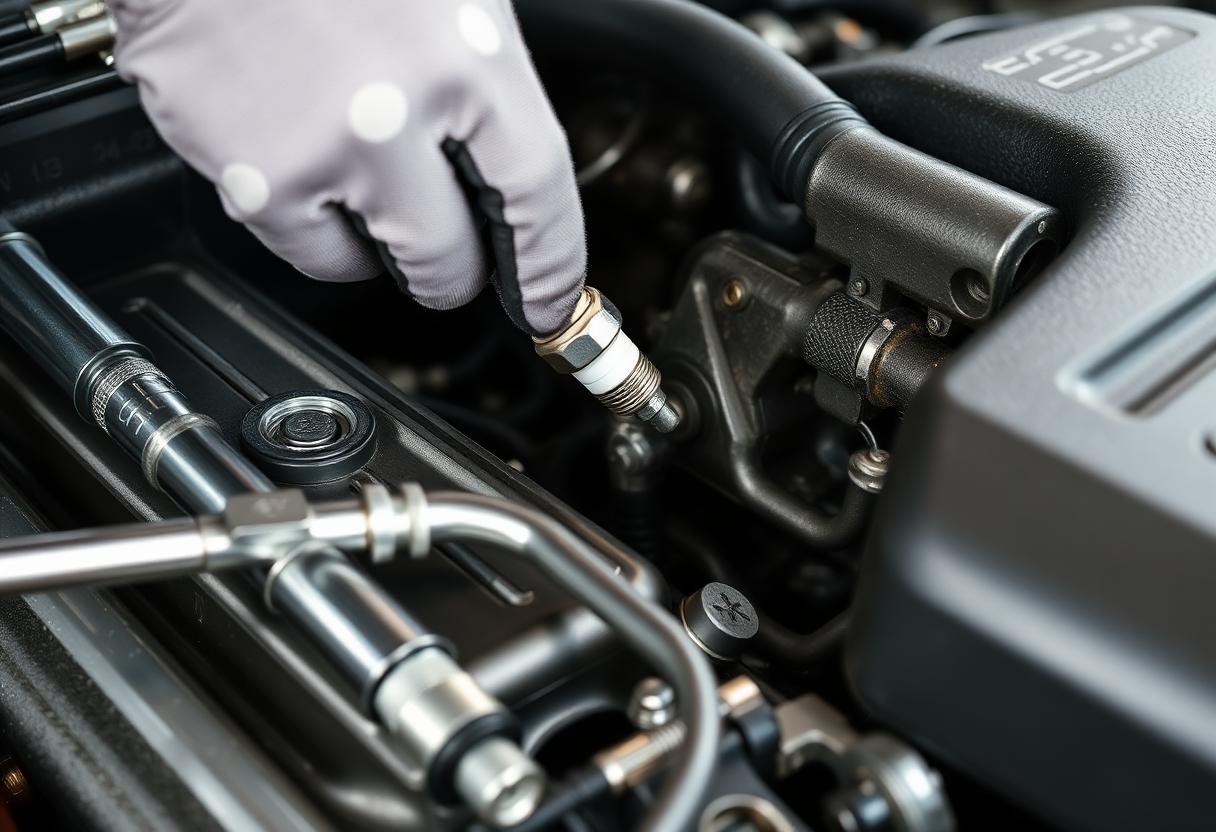
Spark plugs are small but critical components that ignite the air-fuel mixture in your engine. Worn or fouled plugs can cause misfires, poor fuel economy, and hard starting. Replacing them at the right interval keeps your engine running smoothly. This guide covers when to replace spark plugs, how to choose the right type, and a step-by-step replacement procedure.
Tools and Materials You’ll Need
- New spark plugs (correct type and heat range for your vehicle)
- Socket wrench with extension
- Spark plug socket (usually 5/8 in. or 13/16 in., with rubber insert)
- Torque wrench (inch-pounds or foot-pounds, depending on spec)
- Spark plug gap tool (wire type or ramp style)
- Dielectric grease (optional, for boot installation)
- Anti-seize compound (optional, check manufacturer recommendation)
- Compressed air or a brush (to clean debris around plugs)
Symptoms of Worn Spark Plugs
Watch for these signs that your spark plugs need replacement:
- Engine misfires or rough idle
- Hard starting or hesitation during acceleration
- Decreased fuel economy
- Check Engine Light with misfire codes (P0300-P0308)
- Poor performance or lack of power
Replacement Intervals by Spark Plug Type
Replacement intervals vary by plug material and vehicle manufacturer recommendations. Always check your owner’s manual, but here are general guidelines:
- Copper spark plugs: 30,000–50,000 miles. Common in older vehicles.
- Platinum spark plugs: 60,000–80,000 miles. Standard in many modern cars.
- Iridium spark plugs: 80,000–100,000 miles. Often found in high-performance or newer engines.
If you’re unsure, consult your vehicle’s service schedule. Some iridium plugs can last over 100,000 miles, but it’s wise to inspect them at 80,000 miles.
Step-by-Step Spark Plug Replacement
1. Prepare the Engine
Allow the engine to cool completely (at least 30 minutes after driving). Work on a cool engine to avoid burns and to prevent stripping threads in the aluminum cylinder head.
2. Remove the Ignition Coils or Spark Plug Wires
If your vehicle uses individual ignition coils (coil-on-plug), disconnect the electrical connector and remove the coil bolt. Gently pull the coil straight out. For older vehicles with spark plug wires, grasp the boot (not the wire) and twist while pulling to remove.
3. Clean the Area
Use compressed air or a brush to remove dirt and debris from around each spark plug hole. This prevents contaminants from falling into the cylinder when you remove the old plug.
4. Remove the Old Spark Plugs
Fit the spark plug socket onto the plug, with the extension and ratchet. Turn counterclockwise to loosen and remove. Keep the plugs in order so you can identify any cylinder-specific issues (e.g., oil fouling).
5. Check and Adjust the Gap on New Plugs
Even if plugs are pre-gapped, always verify the gap with a tool. Use the gap specified in your owner’s manual (e.g., 0.044 in.). Gently bend the ground electrode to adjust; never pry against the center electrode. For iridium plugs, use a wire-type gap tool to avoid damaging the tip.
6. Install the New Spark Plugs
Apply a small amount of anti-seize to the threads (if recommended by the plug manufacturer). Hand-thread the plug into the cylinder head until it’s snug. Then use a torque wrench to tighten to the manufacturer’s specification. Common torque values range from 15 to 30 ft-lb (180 to 360 in-lb). Overtightening can strip threads; undertightening can cause overheating.
7. Reinstall Ignition Coils or Wires
Apply dielectric grease inside the boot to prevent moisture and ensure a good connection. Push the coil or wire firmly onto the plug until you feel it click. Reattach any connectors or bolts.
8. Repeat for All Cylinders
Work on one plug at a time to avoid mixing up components. After all plugs are replaced, start the engine and check for smooth idle and no misfires.
Common Mistakes to Avoid
- Using the wrong spark plug type or heat range. Always use plugs specified for your vehicle.
- Skipping the gap check. Even pre-gapped plugs can be off.
- Overtightening or undertightening. Use a torque wrench for accuracy.
- Dropping a plug or debris into the cylinder. Clean the area thoroughly.
- Mixing up spark plug wires or coil positions. Label them if needed.
Frequently Asked Questions
How often should I replace spark plugs?
Follow your vehicle’s maintenance schedule. Copper plugs: 30,000–50,000 miles; platinum: 60,000–80,000 miles; iridium: 80,000–100,000 miles.
Can I replace spark plugs myself?
Yes, if you have basic mechanical skills and the right tools. However, some engines have difficult access that may require professional help.
What happens if I don’t replace spark plugs?
Worn plugs can cause misfires, poor fuel economy, catalytic converter damage, and eventually engine performance issues.
Do I need to gap iridium spark plugs?
Always check the gap. Use a wire-type gap tool to avoid damaging the delicate iridium tip. Adjust gently if needed.
When to Call a Professional
If your engine has a complex ignition system (e.g., some V6 or V8 engines with rear plugs that are hard to reach), or if you encounter seized or broken plugs, it’s best to consult a mechanic. Also, if you have a diesel engine or a vehicle with a coil-over-plug system that requires special tools, professional service may be safer.