This post contains affiliate links.
A lit power steering warning light usually means the electric power steering (EPS) system has detected a fault — low system voltage, a sensor or wiring problem, or, on older hydraulic systems, low fluid — and has reduced or cut steering assist. Steering still works, but it takes noticeably more effort, especially at low speed.
What does the power steering warning light mean?
Most vehicles built since the mid-2000s use electric power steering (EPS): an electric motor built into the steering column or rack that does the work a hydraulic pump used to do. When the EPS control module detects a problem, it lights a dashboard icon — usually a steering wheel with an exclamation point, sometimes labeled EPS or PS — and reduces or removes power assist as a protective measure. It does not disconnect the steering itself; the wheel still turns the tires, it just takes real muscle to do it.
Older vehicles and some trucks and vans still use hydraulic power steering, run off a belt-driven pump and a reservoir of fluid. On these, the same warning light more often points to a fluid or pump problem rather than an electrical one. Check your owner’s manual to confirm which system your vehicle uses — the diagnostic path is different for each.
Symptoms you’ll notice
- The steering feels heavy or stiff, most noticeable when parking or making slow, tight turns
- A dashboard icon lights up, sometimes with a chime or a message on the driver information display
- On hydraulic systems: a whining or groaning noise when turning, or visible fluid under the front of the car
- Steering effort that comes and goes, particularly during low-speed maneuvers
What causes the power steering warning light?
The most common causes are low system voltage, a fault inside the EPS module or its sensors, or — on hydraulic systems — low or leaking fluid. NHTSA safety recall investigations into EPS assist loss across several manufacturers have documented recurring patterns worth knowing before you start guessing at parts:
- A weak battery, corroded terminals, or a failing alternator dropping system voltage enough to trigger the light — EPS is unusually voltage-sensitive, even when the steering hardware itself is fine.
- Fretting corrosion at the connector between the EPS module and the torque sensor, a pattern documented across several manufacturer recalls; the module reads it as a fault and cuts assist.
- Contamination or a software fault on the EPS control unit’s circuit board, which can cause intermittent or permanent assist loss.
- A blown fuse for the EPS circuit — check the fuse box diagram before assuming a bigger failure.
- Low power steering fluid or a leak, on hydraulic systems only, usually at a hose fitting or the pump shaft seal.
- Worn steering rack or gear components on higher-mileage vehicles — a mechanical rather than electrical cause, and generally not a DIY fix.
How to diagnose it
Work through these in order — cheapest and easiest checks first:
- Check the battery and charging system first. A voltage drop is the single most common trigger and costs nothing to rule out — if the battery is more than 3-4 years old, weak, or the terminals are corroded, that’s worth addressing before anything else. Our battery testing guide covers how to check it with a multimeter.
- Confirm from the owner’s manual which system you have, electric or hydraulic, then check the thing that actually applies: fluid level and condition on hydraulic systems, or the fuse and a scan tool on electric ones.
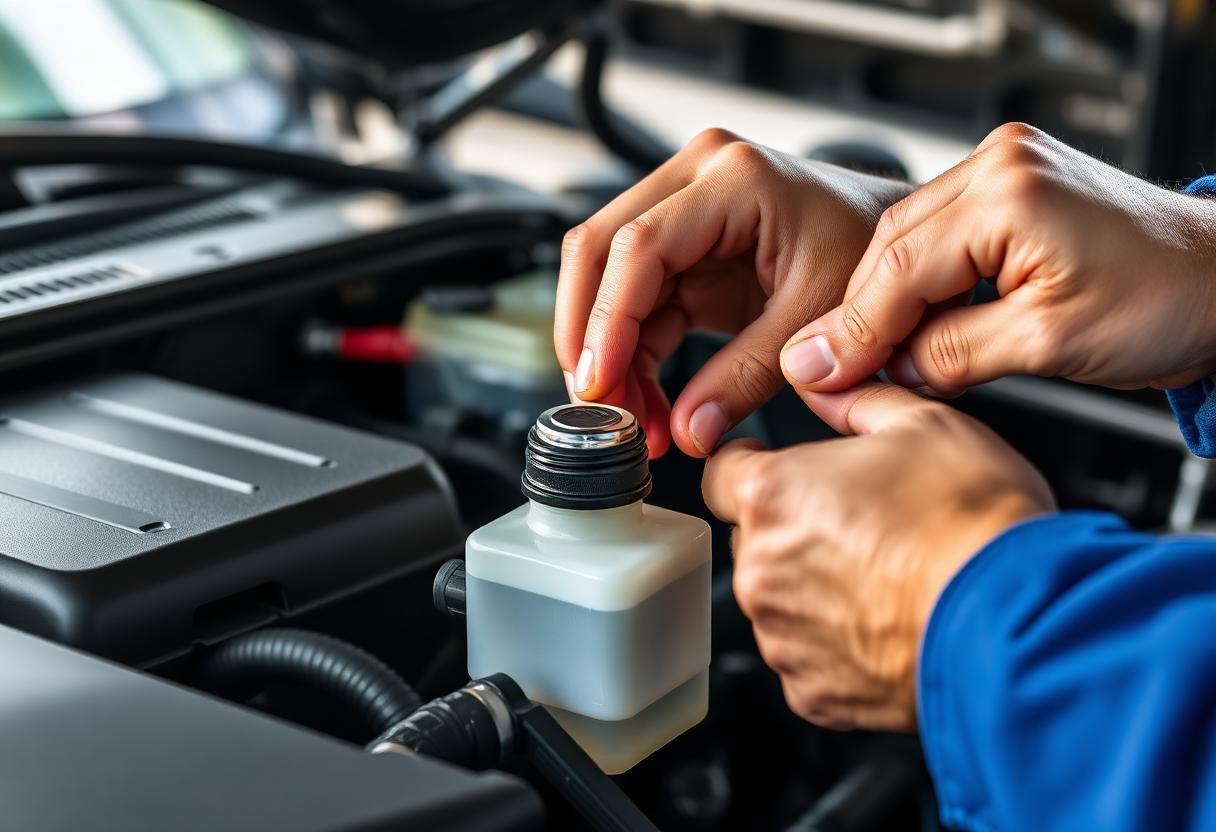
- On hydraulic systems, check the fluid level and look for leaks. Low or dark, burnt-smelling fluid points to a leak or a pump nearing failure; check hose fittings, the pump, and the steering rack for wet spots.
- Check the EPS fuse against the fuse box diagram. A blown fuse is a five-minute fix and rules out the module itself.
- Scan for codes. EPS faults often set a code that starts with C (chassis) rather than the more familiar P (powertrain) codes, so a basic reader that only shows P-codes can come back empty even with a real EPS fault present. See our guide to reading OBD2 codes for how to pull and interpret them.
How to fix it
The right fix depends on which cause the diagnosis pointed to:
- Battery or charging system: charge or replace the battery, clean corroded terminals, and confirm charging voltage is in spec with the engine running. Recheck the light after a drive cycle — on many vehicles it clears itself once voltage is stable again.
- Blown fuse: replace it with one of the same amperage rating. If it blows again immediately, stop — that points to a short somewhere in the circuit, a job for a professional rather than a repeat fuse swap.
- Low hydraulic fluid with no visible leak: top off with the fluid type specified in your owner’s manual (power steering fluid types are not interchangeable across manufacturers) and monitor the level over the next week.
- A visible leak: it needs to be found and repaired before topping off does any lasting good, otherwise you’re just refilling the same leak on a schedule.
- A scanned C-code for the torque sensor, connector, or EPS module: usually beyond a basic DIY fix. Corroded connectors can sometimes be cleaned and reseated, but a faulty EPS module or torque sensor is a parts-and-programming job that typically needs dealer or specialist diagnostic equipment.
Before assuming you need a new part, check whether your vehicle is covered by an EPS-related recall or extended warranty — NHTSA’s recall lookup (search your VIN at nhtsa.gov) is free, and several manufacturers have covered exactly this fault at no charge to the owner.
How to confirm the fix worked
Start the engine and turn the wheel lock-to-lock at a stop, then take a slow-speed test drive with several tight turns. Steering effort should feel normal and the warning light should stay off. If you cleared a code, drive normally for a day or two — some EPS faults take a full drive cycle before the module confirms the fix and turns the light off on its own.
If the light comes back or steering doesn’t return to normal
A code that returns within a day or two after clearing means the underlying fault is still present, not fixed — don’t keep clearing it and driving on. If steering effort is still noticeably heavy after you’ve ruled out the battery, fuse, and fluid, or if the light comes on intermittently during driving rather than staying off, the fault is most likely inside the EPS module, torque sensor, or wiring harness, and needs a proper diagnostic scan rather than more guessing.
When to stop and call a professional
Loss of power steering assist is a safety issue, not just an inconvenience. If steering suddenly becomes very heavy or unresponsive while you’re driving, get the vehicle to a safe stop as soon as you reasonably can — the car can still be steered, but a sudden change in effort at speed is dangerous if you’re not ready for it. Don’t keep driving on a system that’s actively losing assist to try to make it to a shop.
Call a professional rather than continuing to DIY if: the fuse keeps blowing, you find a hydraulic leak at the rack or pump itself, the scan tool shows a torque sensor or EPS module fault code, or the steering makes grinding or clunking noises in addition to the warning light. These point to component failures that need specialized diagnostic equipment or parts most home garages don’t stock.
How to prevent it from happening again
Keep the battery and charging system in good condition — it’s the single most common trigger and the cheapest to maintain. On hydraulic systems, check the fluid level at every oil change and address small leaks before they become fluid-starvation problems. If your vehicle has ever had an EPS-related recall, confirm the recall work was actually completed; a completed recall repair is free and prevents the exact fault this article covers.
Frequently asked questions
Can I still drive with the power steering light on?
Short distances at low speed, usually yes — the steering still works, it just takes more effort. Have it checked soon rather than driving on it indefinitely, and pull over if the effort changes suddenly while you’re moving.
Why does the power steering light come on right after starting the car?
This is often a low-voltage moment — the starter draws a lot of current and some EPS systems briefly flag a fault during or right after cranking, then clear it once voltage stabilizes. If it clears within a few seconds and doesn’t return, it’s usually not worth chasing further; if it stays on, work through the diagnosis steps above.
Does it matter which power steering fluid I use?
Yes. Power steering fluid types vary by manufacturer and aren’t universally interchangeable the way engine oil sometimes is. Use whatever your owner’s manual specifies, not just whatever’s labeled “power steering fluid” on the shelf.
Is a power steering warning light the same as a check engine light?
No. They’re separate systems with separate warning icons, though an EPS fault can sometimes accompany a check engine light if the underlying cause (like low voltage) affects other systems too. Treat the power steering light as its own diagnostic path.