This post contains affiliate links.
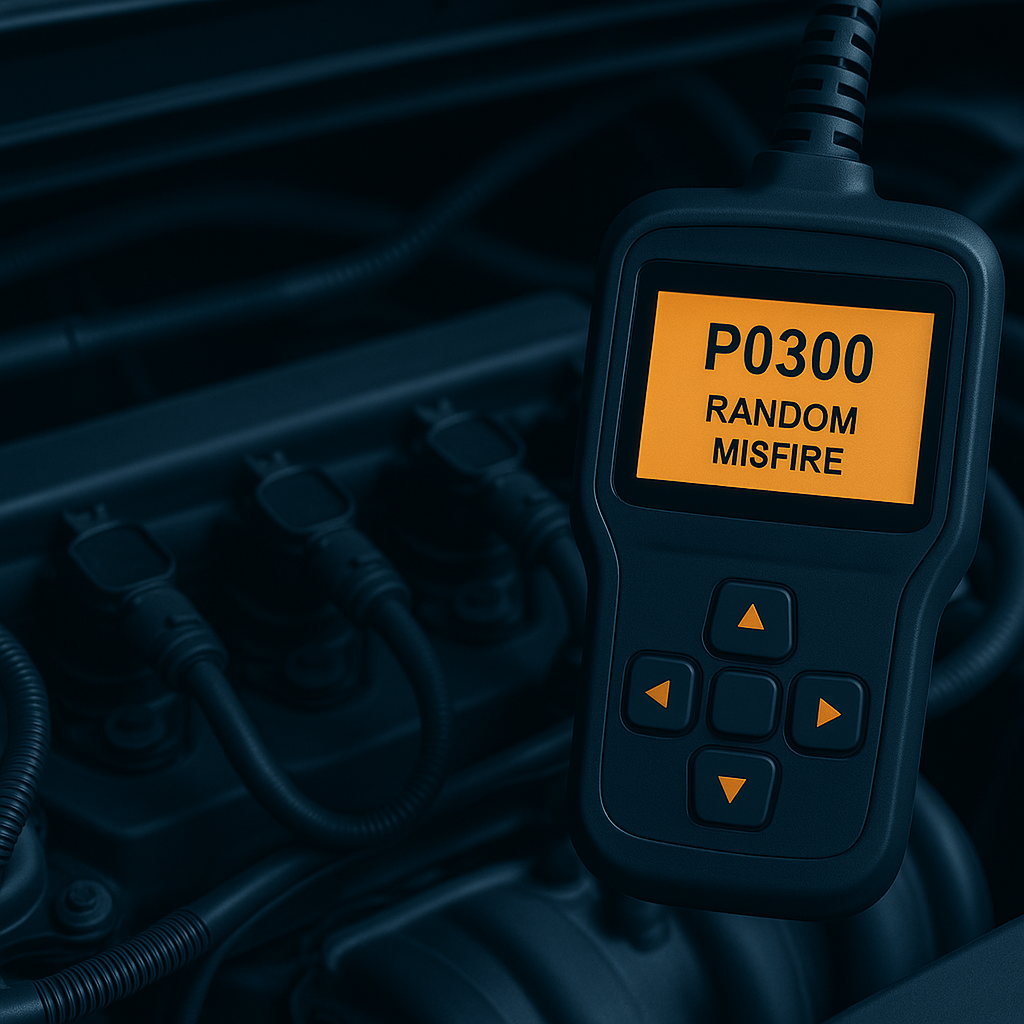
Your engine is shaking at idle, the Check Engine Light is flashing, and your scanner just spat out P0300. That flashing light changes everything about how urgent this is — so let’s get you the full picture fast.
P0300 means your engine control module (ECM) has detected a random or multiple-cylinder misfire — the engine is not burning fuel properly in one or more cylinders, and it can’t pin the problem to a single cylinder. That’s the short answer. The longer answer — including exactly what this means for your Honda Civic, Honda Accord, Toyota Camry, Toyota RAV4, or Ford F-150 — is what this guide covers in full.
Here’s what matters most right now: a flashing Check Engine Light with P0300 is a warning that raw fuel is being dumped into your exhaust, which can destroy your catalytic converter quickly. A steady light is less urgent but still needs attention. This guide walks you through diagnosis in the right order so you fix the actual cause instead of throwing parts at it.
What Is the P0300 Code, Really?
P0300 stands for “Random/Multiple Cylinder Misfire Detected.” A misfire happens when the combustion event in a cylinder fails or is incomplete — the air-fuel mixture doesn’t ignite correctly, or doesn’t ignite at all. Your ECM monitors the tiny speed fluctuations of the crankshaft as each cylinder fires. When a cylinder misfires, the crankshaft momentarily slows, and the ECM catches it.
The companion codes P0301 through P0308 point to a specific cylinder (P0301 = cylinder 1, P0302 = cylinder 2, and so on). P0300 is different — it means the misfires are either jumping between cylinders or happening in several at once. That distinction is a huge diagnostic clue: a single-cylinder misfire usually points to a component on that one cylinder (a coil, a plug, an injector), while a random multi-cylinder misfire more often points to something shared by all cylinders — fuel delivery, vacuum, timing, or compression across the board.
How P0300 Shows Up Differently Across These Five Vehicles
P0300 is a universal code, but each of these vehicles has known weak points that make certain causes far more likely. Here’s what to suspect first on each model before you start replacing parts.
Honda Civic (2006–Present)
On the 2006–2011 Civic with the 1.8L R18A engine, ignition coils and spark plugs are the leading cause of P0300. These engines use a coil-on-plug setup, and a single weak coil can cause enough intermittent misfiring that the ECM logs P0300 rather than a single-cylinder code. Iridium plugs on these engines are often left in far past their service interval, and worn plugs are a frequent trigger.
On the 2016-and-newer Civic with the 1.5L turbocharged engine, P0300 is more often tied to fuel-related issues — including fuel injector deposits and, in some cases, the well-documented fuel dilution concern where gasoline washes into the oil during short cold-weather trips. If your turbo Civic throws P0300 mostly on cold starts, look at ignition components and fuel trims together.
Honda Accord (2003–Present)
The four-cylinder Accord (K24 engine) most commonly triggers P0300 from aging coils and plugs, much like the Civic. The V6 Accord (J-series) has a specific quirk worth knowing: it uses a Variable Cylinder Management (VCM) system that deactivates cylinders under light load. VCM-equipped engines are known for oil consumption and spark plug fouling on the deactivated cylinders, which can produce intermittent misfires that log as P0300. Many V6 Accord owners install aftermarket VCM-disabling devices specifically to address this.
On any Accord, also check for vacuum leaks around the intake manifold and PCV system — a lean condition from an unmetered air leak causes exactly the kind of random, wandering misfire that sets P0300.
Toyota Camry (2002–Present)
On the four-cylinder 2AZ-FE Camry (2002–2011), the notorious oil consumption problem ties directly into P0300. Oil getting past worn rings or valve stem seals fouls the spark plugs, and fouled plugs misfire. If your Camry burns oil and throws P0300, replacing plugs alone is a temporary fix — the oil consumption keeps re-fouling them.
The V6 Camry (2GR-FE) had a well-known oil line issue on early models and is otherwise fairly robust, but it uses coil-on-plug ignition where coils eventually wear out. On newer Camrys with the A25A engine, direct injection means carbon buildup on intake valves can contribute to misfires over higher mileage. Across all Camry generations, a lazy or failing mass airflow (MAF) sensor is a common shared-cause trigger for P0300.
Toyota RAV4 (2006–Present)
The RAV4 shares engine families with the Camry, so the same patterns apply — 2AZ-FE oil consumption and plug fouling on older models, coil-on-plug wear across the board. RAV4s are frequently driven in stop-and-go and short-trip conditions, which accelerates plug fouling and carbon buildup, both of which contribute to random misfires.
On the newer 2.5L Dynamic Force engine (A25A) found in current RAV4 and RAV4 Hybrid models, intake valve carbon deposits from direct injection are the emerging cause of higher-mileage misfires. If you have a hybrid RAV4 with P0300, remember that the engine cycles on and off frequently, so intermittent misfires may only appear under specific load conditions — capturing freeze frame data becomes especially valuable here.
Ford F-150 (2004–Present)
The 5.4L Triton V8 (2004–2010) is infamous for two P0300-related issues: the two-piece spark plug design that breaks during removal, and coil-on-plug failures. If your Triton F-150 has original or high-mileage plugs and coils, they are the prime suspects. These engines are also sensitive to worn plugs causing coil breakdown, so replacing plugs and coils together as a set is often the smart move.
On the EcoBoost F-150 (2.7L and 3.5L turbo), P0300 frequently traces to ignition components struggling under boost, carbon buildup on intake valves (direct injection), and in some cases condensation collecting in the intercooler that gets ingested and causes a stumble — a known “EcoBoost shudder” under hard acceleration in humid conditions. On the naturally aspirated 5.0L Coyote V8, coils and plugs remain the usual culprits. Across all F-150 engines, check for any open Technical Service Bulletins, as Ford has issued PCM calibration updates that address certain misfire complaints.
Step-by-Step Diagnostic Process for P0300
Follow these steps in order. P0300 has more possible causes than almost any other common code, so a methodical process is the only way to avoid wasting money on parts you don’t need.
Step 1: Check Whether the Light Is Flashing
Before anything else, note whether your Check Engine Light is flashing or steady. A flashing light means the misfire is severe enough to damage your catalytic converter right now. If it’s flashing, stop driving, reduce load immediately, and avoid high RPM until you’ve addressed the cause. Continuing to drive with a flashing misfire light is one of the fastest ways to turn a cheap repair into a cheap repair plus a new catalytic converter.
Step 2: Scan for Companion Codes and Freeze Frame
Plug in your scanner and record every code present, not just P0300. This is the single most important diagnostic step. Look specifically for:
- P0301–P0308 — cylinder-specific misfire codes. If P0300 appears with, say, P0304, you have a random misfire that’s worst on cylinder 4 — start there.
- P0171 / P0174 — lean codes. A lean-running engine misfires across multiple cylinders and sets P0300. This points toward vacuum leaks or fuel delivery, not ignition.
- P0101 / P0102 — mass airflow sensor codes. A bad MAF gives the ECM wrong air data and causes wandering misfires.
- P0420 / P0430 — catalyst codes. If these appear alongside P0300, the misfire may already be damaging your converter.
Capture the freeze frame data too. It records engine conditions at the moment the misfire was detected — RPM, load, coolant temperature, and fuel trims. A misfire that only appears cold, only under load, or only at idle tells you very different things about the cause.
Step 3: Inspect Spark Plugs and Ignition Coils
Ignition is the most common cause of misfires, so start here on all five of these vehicles. Pull the spark plugs and examine them. Normal plugs have light tan or grayish deposits. Watch for these warning signs:
- Black, sooty deposits — running rich, or a weak spark.
- Oily, wet plugs — oil getting into the cylinder (common on high-mileage Camry/RAV4 2AZ-FE and VCM Accord).
- Worn, rounded electrodes — plugs past their service life. Iridium plugs typically last 60,000–120,000 miles depending on the vehicle.
- Cracked porcelain — a damaged plug that will misfire consistently.
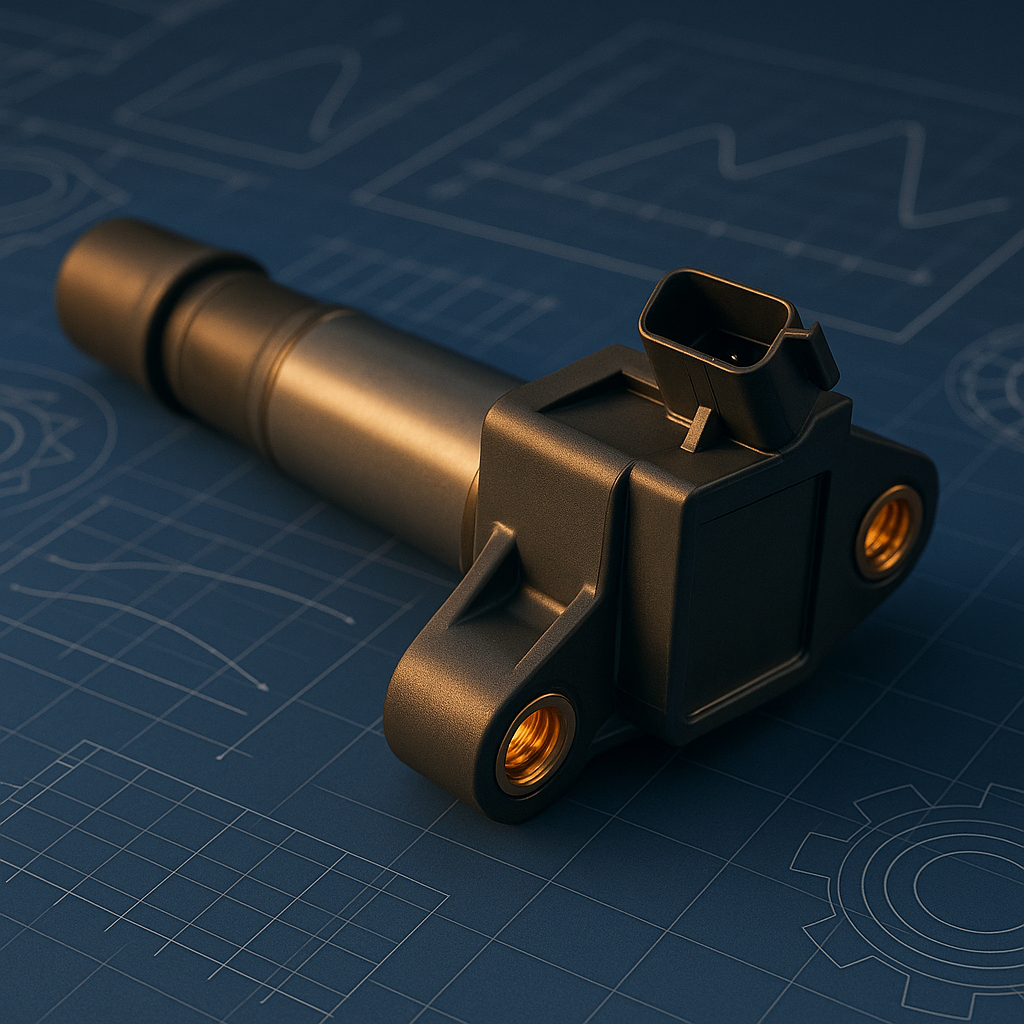
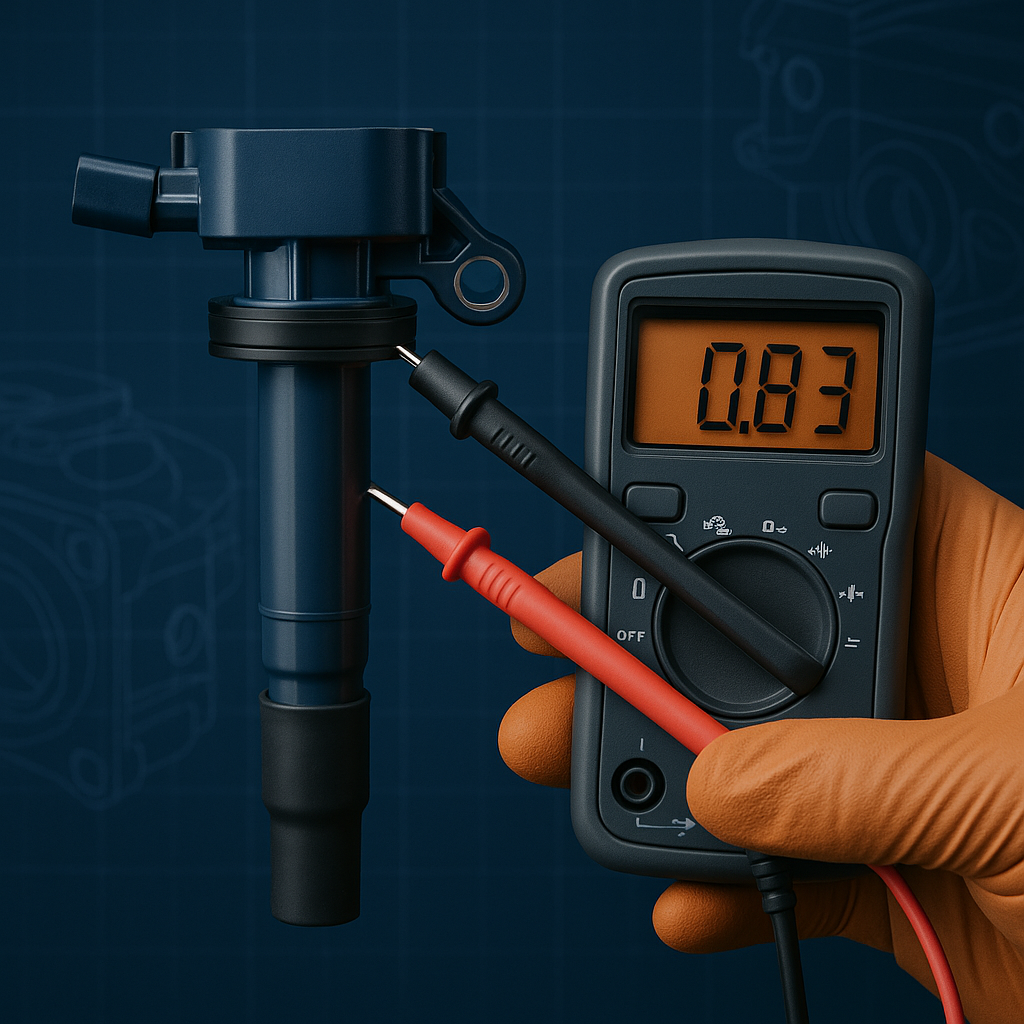
For coil-on-plug systems (all five vehicles), a reliable test is to swap the coil from a suspected cylinder to a different cylinder and see whether the misfire follows the coil. If cylinder 3 was misfiring and you move its coil to cylinder 5, and now cylinder 5 misfires, you’ve found a bad coil. This swap test costs nothing and is one of the most useful tricks for isolating ignition faults.
Step 4: Check for Vacuum Leaks and Lean Conditions
If you have lean codes (P0171/P0174) alongside P0300, or if your fuel trims are high positive numbers in the freeze frame data, hunt for unmetered air. With the engine idling, listen for hissing around the intake manifold, throttle body, PCV hoses, and brake booster line. A cracked intake gasket or a split vacuum hose lets in air the MAF sensor never measured, leaning out the mixture and causing random misfires.
A can of carburetor cleaner or a smoke test helps pinpoint leaks: spray small amounts around suspected joints (engine running), and if RPM changes, you’ve found the leak. This is a very common P0300 cause on the Accord and Camry especially.
Step 5: Evaluate Fuel Delivery
If ignition checks out and there are no vacuum leaks, move to fuel. Clogged or leaking fuel injectors cause misfires — a partially clogged injector delivers too little fuel to its cylinder. On direct-injection engines (newer Camry, RAV4, EcoBoost F-150, turbo Civic), carbon buildup on intake valves restricts airflow and causes misfires that a fuel additive won’t reach. A weak fuel pump or clogged fuel filter can also cause multi-cylinder misfires under load, when demand is highest. Check fuel pressure against spec if you suspect delivery issues.
Step 6: Test Compression If Everything Else Checks Out
If you’ve ruled out ignition, vacuum, and fuel, the misfire may be mechanical. A compression test on each cylinder reveals worn rings, burnt valves, or head gasket problems. Low compression on one or more cylinders explains a misfire that no amount of new plugs or coils will fix. This is more common on very high-mileage examples of all five vehicles, and it’s the point where many DIYers decide to bring in a professional.
Estimated Repair Costs by Cause
Costs vary by location, shop type, and parts choice. These are realistic combined parts-and-labor ranges at an independent shop. DIY parts-only costs are typically 40–60% lower, and ignition work is very DIY-friendly on all five of these vehicles.
Common Mistakes People Make With P0300
These are the errors that cost the most time and money on a random misfire. Avoid them and you’re ahead of most DIYers.
Ignoring a Flashing Light
A flashing misfire light means active converter damage. Driving on it can add a catalytic converter to your repair bill.
Throwing Parts at It
Replacing all coils and plugs without diagnosis sometimes works by luck, but often masks a vacuum leak or fuel issue that returns.
Skipping Companion Codes
P0300 with a lean code is a totally different problem than P0300 alone. Reading only the first code sends you down the wrong path.
Ignoring Oil Consumption
On 2AZ-FE Camry/RAV4 and VCM Accord, oil fouls plugs. New plugs alone won’t hold if the oil burn isn’t addressed.
Breaking Triton Plugs
On 5.4L F-150s, the two-piece plugs seize and break. Use the correct procedure and penetrating oil, or you’ll snap one in the head.
Not Checking TSBs
Ford, Honda, and Toyota have issued PCM updates and fixes for specific misfire complaints. Check before spending on parts.
Can You Drive with P0300?
It depends entirely on whether the light is flashing. With a flashing Check Engine Light, you should not keep driving — the misfire is severe enough to damage your catalytic converter, and hard acceleration makes it worse. Drive only far enough to get somewhere safe to diagnose or to a shop, keeping RPM low.
With a steady light and only a mild stumble, the car is drivable in the short term, but a misfire never fixes itself. It wastes fuel, can foul plugs further, and risks progressing to converter damage. Treat a steady P0300 as something to diagnose within days, not weeks.
Frequently Asked Questions About P0300
What’s the difference between P0300 and P0301–P0308?
P0300 is a random or multiple-cylinder misfire — the ECM can’t isolate it to one cylinder. P0301 through P0308 identify a specific misfiring cylinder (the last digit is the cylinder number). If you have P0300 plus a specific code like P0303, start your diagnosis on that identified cylinder, then check whether a shared cause is affecting others.
Can bad gas cause P0300?
Yes. Low-quality fuel, water-contaminated fuel, or the wrong octane can cause misfires across multiple cylinders. If P0300 appeared right after a fill-up, run the tank down, refill with quality top-tier fuel, and see whether the code clears after a few drive cycles before assuming a hardware failure.
Will a misfire damage my engine?
A misfire rarely causes immediate internal engine damage on its own, but it dumps unburned fuel into the exhaust, which overheats and damages the catalytic converter — an expensive part. Prolonged misfiring can also wash oil off cylinder walls and increase wear. The bigger risk is usually to the converter, which is why a flashing light demands prompt action.
How much does it cost to fix P0300?
It depends entirely on the cause. If it’s spark plugs, you might spend under $100 DIY. Coils add $60–$200 each. A vacuum leak or injector is a few hundred dollars. Mechanical problems like low compression can run into the thousands. The whole point of proper diagnosis is to land on the cheapest fix that actually solves it.
Why does my P0300 only appear when cold or under load?
A misfire that shows up only cold often points to weak ignition components that struggle when the mixture is richer at startup, or to fuel dilution on turbo engines. A misfire only under load points to ignition breaking down at high cylinder pressure (worn plugs/coils) or fuel delivery falling short when demand peaks. The freeze frame conditions are your best clue here.
Should I replace all the coils and plugs at once?
On high-mileage vehicles, replacing plugs as a full set is smart maintenance and cheap insurance. Replacing all coils at once is reasonable if several are original and high-mileage, especially on the 5.4L F-150 where they commonly fail together. But if you can isolate a single bad coil with the swap test, you don’t have to replace all of them — do what the diagnosis supports plus sensible preventive maintenance.
Need More OBD2 Code Help?
Fixopedia covers diagnostic trouble codes with the same step-by-step, plain-English approach. If P0300 led you to a catalyst code, check our P0420 guide next.
Quick Summary and Your Next Step
P0300 is one of the most common — and most variable — OBD2 codes across Honda, Toyota, and Ford vehicles. Here’s the action plan condensed:
- Check if the light is flashing — flashing means stop driving to protect your catalytic converter.
- Scan for companion codes and freeze frame — cylinder-specific and lean codes completely change your diagnostic path.
- Inspect plugs and coils first — ignition is the most common cause; the coil swap test isolates a bad coil for free.
- Hunt for vacuum leaks — especially if lean codes accompany P0300.
- Check fuel delivery and carbon buildup — injectors, fuel pressure, and intake valve deposits on direct-injection engines.
- Test compression last — if ignition, air, and fuel all check out, the problem may be mechanical.
- Address root causes like oil consumption — on 2AZ-FE Camry/RAV4 and VCM Accord, fix the oil burn or the plugs will foul again.
Whether it’s a high-mileage Civic on tired coils, a Camry fouling plugs from oil consumption, an F-150 with breaking Triton plugs, or an EcoBoost stumbling under boost — the diagnostic logic is the same. Work through it in order and you’ll land on the right fix at the right price instead of guessing.
A random misfire feels alarming, but it’s a solvable puzzle. Take it one step at a time and you’ll come out ahead.